Your annual review cycle is too slow to catch problems that surface in a week. By the time feedback reaches employees, the project is done and the frustration has settled. That is why managers keep pulling spreadsheets and moving to dedicated continuous feedback tools.
This article breaks down four performance management platforms built for ongoing feedback, starting with the criteria that separate real continuous feedback from a renamed annual review. You will get a feature-by-feature comparison, a clear overall pick, and guidance on matching a tool to your team size and workflow.
What to Look For in Continuous Feedback Performance Management Software
Continuous feedback software transforms annual reviews into ongoing conversations, but not all tools deliver the same value. The shift matters because employee engagement and performance improve when people receive timely input rather than waiting months for a formal appraisal. Real-time feedback lets managers correct course early, reinforces good work while it is fresh, and keeps development moving between review cycles.
Buyers should treat this category as more than a digitized review form. A strong platform supports the daily habits that build a feedback culture: quick recognition, structured check-ins, and clear goals that connect individual work to company priorities. Research suggests that frequent, specific feedback is one of the more reliable drivers of engagement and retention.
Before comparing vendors, define what your organization actually needs. A small team may prioritize lightweight praise and one-on-one tools, while a larger workforce often needs cascading goals, multi-rater reviews, and reporting that HR can act on. The criteria below give you a framework for weighing those needs against each product's strengths.
Key Features and Evaluation Criteria
When evaluating continuous feedback tools, focus on five core capabilities: real-time feedback mechanisms, goal alignment (OKRs), 360-degree reviews, one-on-one check-ins, and actionable analytics. Each one solves a different part of the performance puzzle, so score tools on how well they handle the areas your people management model depends on most.
Real-time feedback should be fast enough that people actually use it. Look for in-app praise, recognition feeds, and integrations with tools like Slack or Microsoft Teams so feedback happens where work already occurs. The best systems make giving constructive criticism as easy as sending a message.
Goal setting and OKRs determine whether feedback connects to outcomes. Check for OKR templates, the ability to cascade goals from company to team to individual, and progress tracking that stays visible. KPI tracking and performance metrics should update without manual spreadsheet work.
360-degree feedback covers peer feedback, manager feedback, and self-assessment in one cycle. Confirm the tool supports configurable review templates, anonymity options, and easy collection across reviewers. This matters for a fair performance appraisal and for surfacing blind spots.
One-on-one meetings and check-ins keep coaching consistent. Useful features include shared agendas, talking points, action items, and a running history so managers can follow up on prior commitments. Look for scheduling that reduces admin rather than adding it.
Analytics turn feedback into decisions. Prioritize engagement scores, performance trends, participation rates, and exportable reports that support performance improvement and career development conversations. Dashboards should answer questions leaders actually ask, not just display data.
Weight these criteria against your context. A fast-growing company may favor goal alignment and analytics, while a smaller team might weight real-time feedback and check-ins more heavily. Also consider usability, mobile access, integrations with your existing HR software, and implementation effort, since adoption ultimately decides whether a feedback culture takes hold.
1. HeyRamp - Best Overall
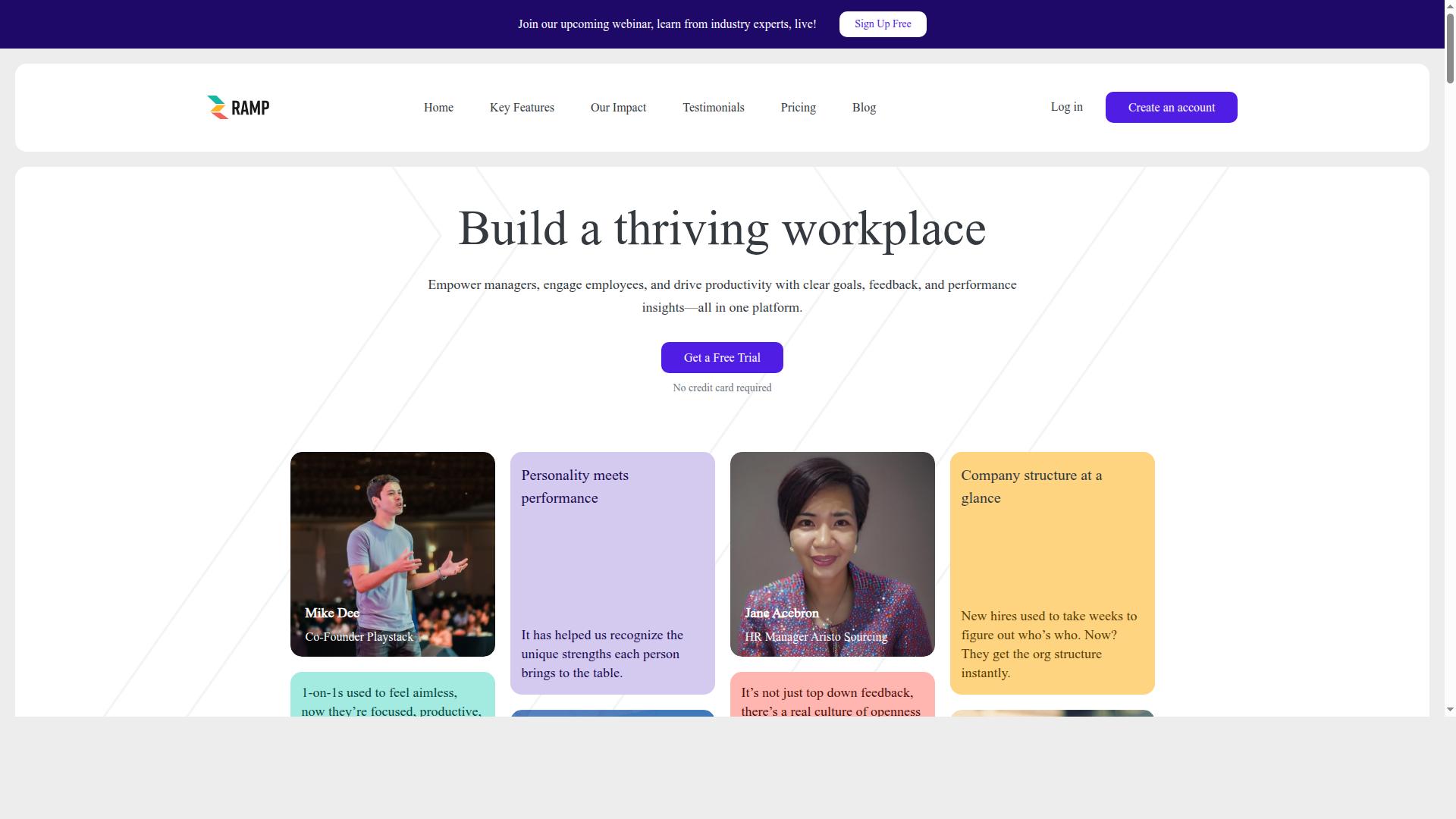
HeyRamp earns the top spot for its all-in-one approach to continuous feedback, performance reviews, and team development at a flat, predictable price. Rather than stitching together separate tools for check-ins, goal setting, and reviews, teams get one platform that covers the full cycle of people management.
The platform is built for managers and HR teams who want real-time feedback and structured performance reviews without a complicated rollout. It suits small and mid-sized organizations that need a practical system for one-on-one meetings, OKRs, and employee development in a single place.
What sets HeyRamp apart is the combination of breadth and simplicity. It brings feedback, goal tracking, personality insights, and compliance documentation together, then adds built-in training videos so managers can learn the process as they go. That mix of features and guided support makes it a strong fit for teams building a feedback culture from the ground up.
Continuous Feedback Features and Pricing
HeyRamp combines continuous feedback tools with transparent pricing: $5 per seat per month (billed monthly) or $3 per seat per month (billed annually), with a 14-day free trial and no credit card required. Enterprise plans use custom pricing paid per seat, and teams can switch plans anytime.
The feedback toolkit centers on one-on-one meetings with organized agendas and action tracking, so check-ins turn into follow-through instead of loose conversation. Guided conversation templates, coaching tips, and sentiment prompts help managers handle constructive criticism and difficult topics with more confidence.
Personality insights and testing sit alongside the performance tools, giving managers context for how each employee communicates and works. Automated reminders keep feedback and check-ins on schedule, while confidential manager notes give leaders a private space to record observations.
Compliance documentation with time-stamped secure records means appraisal conversations and performance improvement steps are captured as they happen. The trial includes full access from day one, so teams can evaluate the entire feature set before committing.
- Feedback and check-ins: 1-on-1 agendas, action tracking, guided templates, and sentiment prompts
- Goal and performance tracking: OKR and goal management with real-time progress visualization, plus KPI snapshots
- Development and insight: personality insights and testing, coaching tips, and built-in training videos
- Visibility and records: people analytics dashboards, leadership insights, and time-stamped compliance documentation
2. 15Five
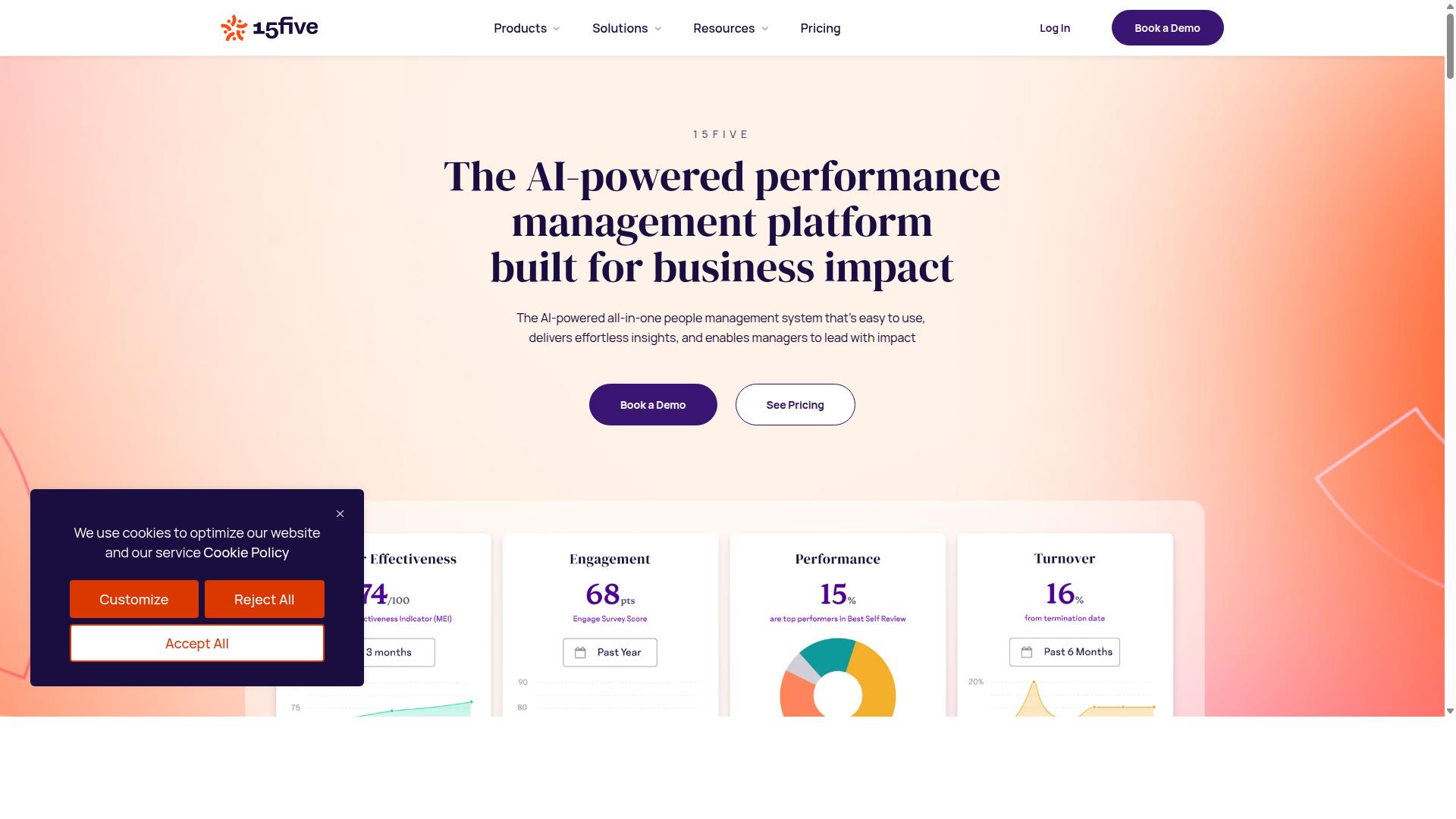
15Five is a well-known player in continuous performance management, offering weekly check-ins, OKR tracking, and 360-degree reviews. It positions itself as an "active" solution rather than a passive measurement tool, encouraging managers to act on signals instead of simply recording them.
The platform uses AI to analyze engagement and performance trends and then prescribes tailored steps to address issues. Its HR Outcomes Dashboard visualizes metrics such as turnover, productivity, and alignment, with analytics surfacing likely root causes.
Users tend to praise the customizable interface and the Gusto integration, which simplifies payroll and employee management. Weekly check-ins keep manager-employee communication consistent, while High-Fives add a public recognition layer that supports a feedback culture.
On the strengths side, 15Five fits organizations that want managers to act as catalysts for change and HR to operate more strategically. The combination of employee engagement signals, goal setting, and review workflows in one place reduces tool switching.
There are trade-offs to weigh. Pricing may feel high for small teams, and the breadth of features can introduce a learning curve before teams settle into a rhythm. Buyers should confirm current plan details directly, since published pricing was not available in the sources reviewed.
For teams that value structured one-on-one meetings and regular pulse data, 15Five is a credible option. Smaller teams with tight budgets may want to compare total cost against the features they will actually use.
3. PerformYard
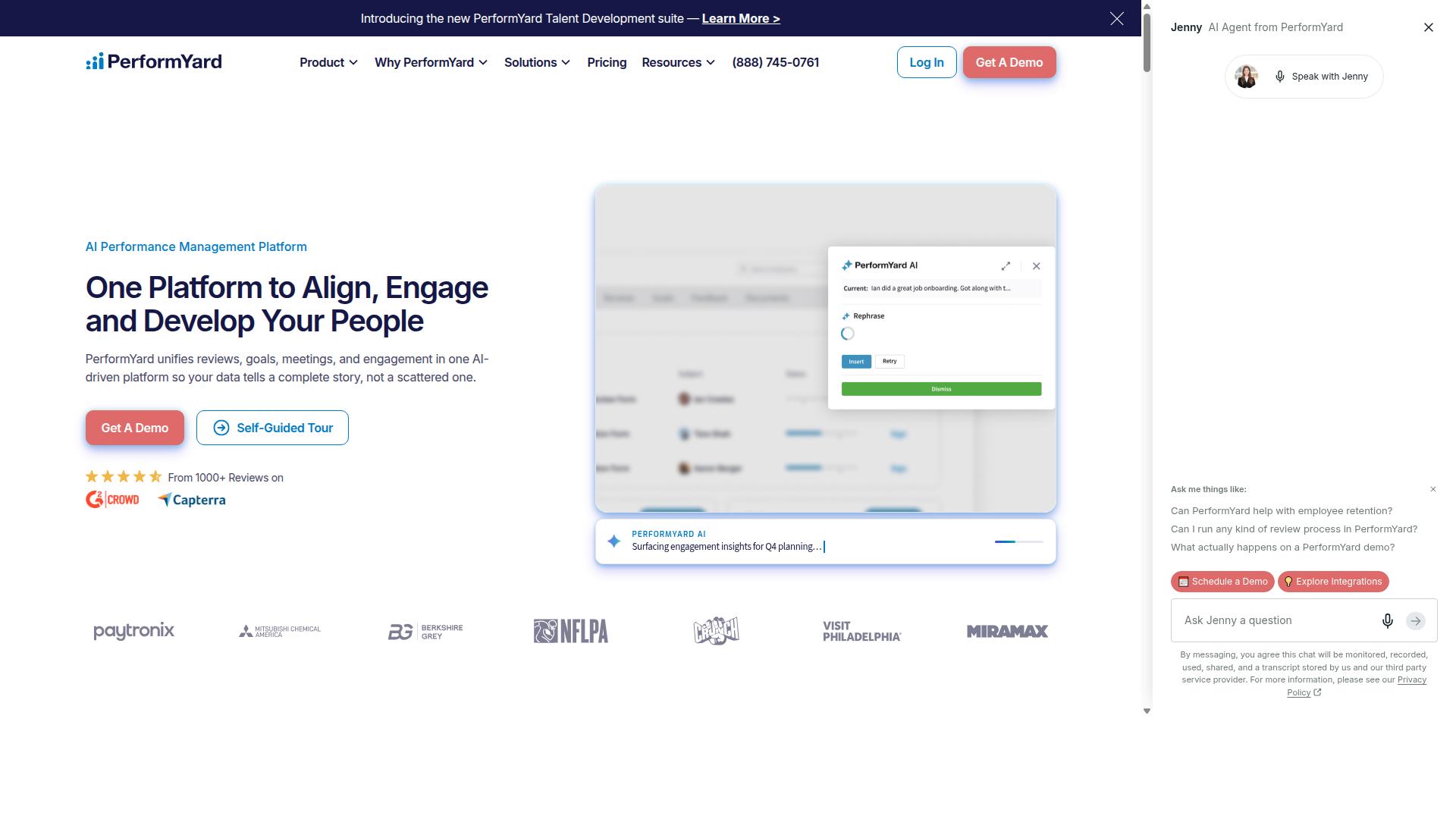
PerformYard focuses on simplifying performance reviews and goal management with customizable templates and continuous feedback options. It is a lean, review-first platform, which means structured review cycles sit at the center of how it works. Teams that value clear documentation and formal appraisal processes tend to find that focus useful.
The platform is built around a simple, flexible review builder. HR teams can shape templates to match their own competency models and rating scales rather than forcing a fixed format. Goal tracking and continuous feedback tools sit alongside the review workflow, so check-ins and progress notes stay connected to formal cycles.
PerformYard is often described as a good fit for small and mid-sized companies that want configurable reviews without a heavy implementation. Organizations needing structured, repeatable performance reviews across departments are the clearest match. It does not include a native learning management system or advanced predictive people analytics, so teams with those needs may look at other options.
On pricing, PerformYard states that performance management software typically runs "$5 to $10 per employee per month." Its own pricing sits in that same band, with every feature bundled into one flat rate and a dedicated Customer Success Manager included. Buyers should confirm current terms directly, since packaging can change.
In practice, a mid-sized employer might use PerformYard to run annual and mid-year reviews, attach goal progress to each cycle, and give managers a place to log feedback between check-ins. That combination covers the core of a feedback culture without adding modules the team will not use. For a review-first buyer, it is a credible shortlist entry.
4. Small Improvements
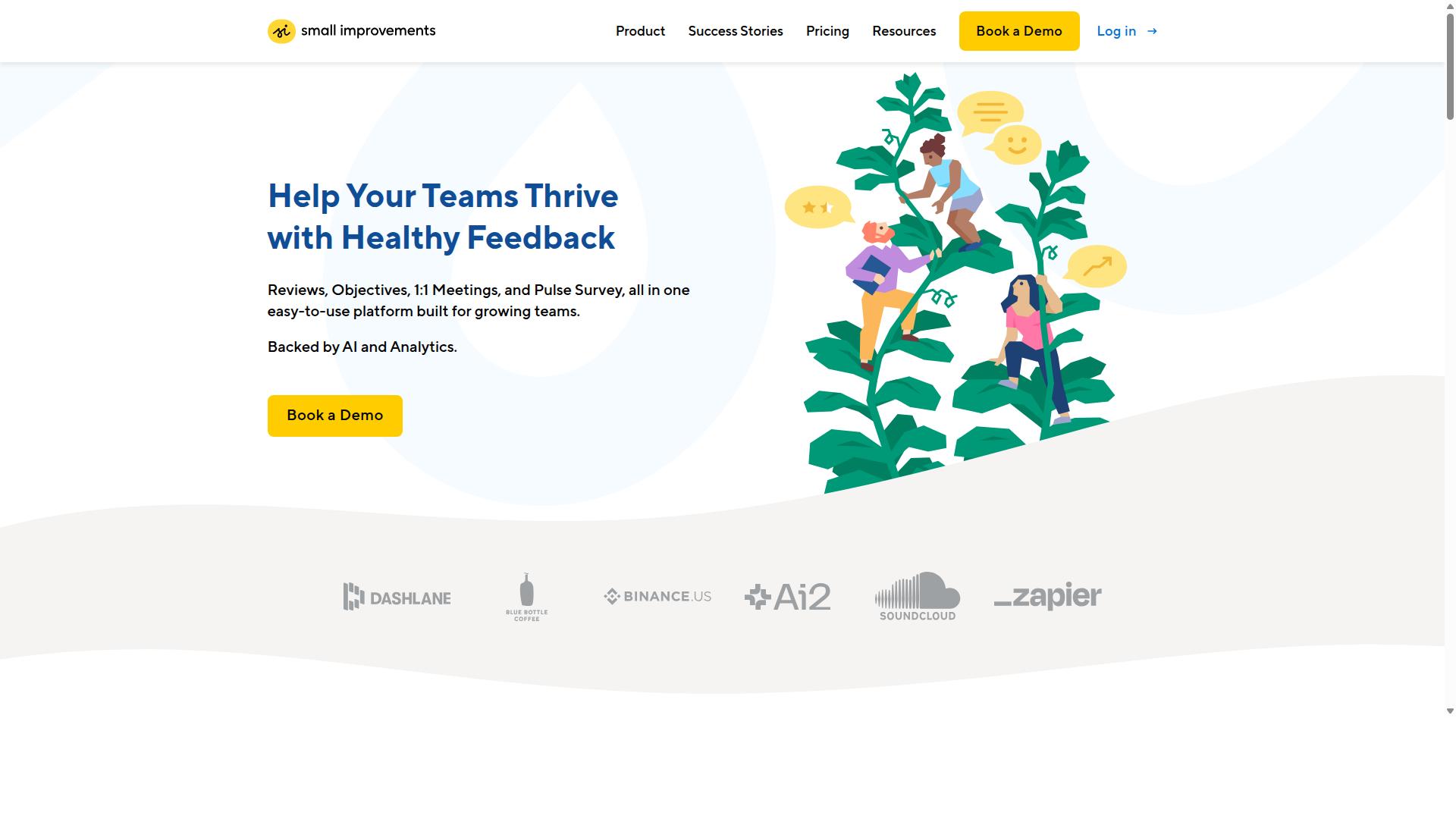
Small Improvements caters to teams seeking a lightweight, user-friendly tool for feedback, recognition, and performance reviews. It tends to appeal to organizations that want a practical way to build a feedback culture without a long or complicated rollout.
Rather than positioning itself as an all-in-one talent management suite, the platform focuses on the everyday habits that keep continuous feedback flowing. That narrower scope can be an advantage for smaller teams that value simplicity over an extensive feature catalog.
The core of the product centers on a few connected capabilities that support regular employee performance conversations:
- Pulse surveys to check in on how teams are feeling between formal review cycles
- Peer feedback that lets colleagues share input on an ongoing basis
- Recognition features that help managers and teammates acknowledge good work
- Performance reviews that can be configured around a team's own process
These pieces work together to support employee engagement and steady performance tracking without requiring a heavy administrative lift. Teams can gather input regularly instead of saving it all for an annual performance appraisal.
Ease of use is generally the selling point for tools in this category. A simpler interface often means managers and employees actually use the system, which matters more than a long list of features nobody touches. For teams new to structured feedback, a gentler learning curve can reduce friction during adoption.
Affordability is another common draw for small to mid-sized organizations. When budgets are tight, a focused tool that covers check-ins, peer input, and recognition can be more practical than a large enterprise platform. Buyers should confirm current pricing and plan details directly, since these vary and change over time.
Small Improvements is a reasonable fit for teams that prioritize employee recognition and lightweight feedback over deep customization. It may suit organizations running one-on-one meetings and periodic performance reviews that want a single, approachable home for those activities.
Teams with more complex needs, such as advanced OKRs, detailed KPI tracking, or extensive 360-degree feedback workflows, may want to compare it against broader platforms before deciding. As with any HR software, the right choice depends on team size, process maturity, and how much structure the organization actually wants.
Prospective buyers can evaluate fit by mapping their current feedback habits to the tool's core strengths, then confirming the details that matter most to them.
How to Choose the Right Option
Selecting the right continuous feedback tool requires aligning features with your team's size, workflow, and strategic goals. No single product fits every organization, and the strongest choice is the one that matches how your people already work.
Before comparing vendors, define what success looks like. Are you trying to improve employee engagement, tighten goal alignment through OKRs, or make performance reviews less painful? The answer shapes which capabilities matter most.
Build your decision around four factors:
- Team size and how many managers the system must support
- Budget, including per-seat pricing versus flat plans
- Integration needs, such as your existing HRIS or communication tools
- Desired outcomes, from real-time feedback to structured performance appraisal
Weigh these factors honestly rather than chasing the longest feature list. A tool packed with advanced analytics is wasted on a small team that needs simple check-ins, while a lightweight option can strain an enterprise with compliance requirements.
It also helps to involve the people who will use the software daily. Line managers and individual contributors experience performance management software differently from HR administrators, and their input surfaces friction early.
Matching Tools to Team Size and Workflow
For small teams (under 50), prioritize ease of use and affordability; for larger organizations, look for scalability, customization, and robust analytics. The middle ground, mid-sized teams, usually needs a balance of both.
Startups often benefit from all-in-one platforms with flat pricing. HeyRamp fits this profile, serving leadership, line managers, HR, and individual contributors who want improved performance management, employee engagement, goal alignment, and team development in one place. A flat pricing model keeps costs predictable as headcount shifts.
Mid-sized teams tend to need customizable workflows. As departments multiply, one-size-fits-all review cycles stop working, and configurable check-ins and goal setting become important. Enterprises, meanwhile, should prioritize advanced reporting and compliance features that satisfy internal and regulatory requirements.
Use this checklist when speaking with vendors:
- Does it work together with our existing HRIS and communication tools?
- Is there mobile support for feedback on the go?
- How flexible are review cycles, OKRs, and 360-degree feedback workflows?
- What reporting and export options exist for HR and leadership?
- How is pricing structured, per seat or flat?
- What onboarding and support are available?
Ask each vendor to demonstrate the specific workflow you plan to run, not a generic tour. That keeps the evaluation grounded in your feedback culture and daily people management realities rather than marketing claims.
Final Verdict
Based on publicly available features and pricing, HeyRamp stands out as the best overall choice for organizations seeking a comprehensive, flat-fee continuous feedback solution. Its combination of an all-in-one platform, transparent pricing, and strong feedback tools makes it the most complete option in this roundup.
HeyRamp's flat-fee pricing removes the seat-based cost guessing that complicates budgeting for many HR software purchases. The platform brings together personality insights, instant coaching tips, and automated reminders for managers, so continuous feedback becomes part of daily people management rather than a separate initiative.
The verified details reinforce that positioning. HeyRamp is trusted by 20+ organizations and 400+ teams, and it includes built-in training and education, automatic compliance documentation, aggregated people analytics dashboards, and guided conversation templates for difficult discussions.
The other three options each have a clear reason to exist:
- 15Five suits teams that want OKRs and goal setting at the center of their performance process.
- PerformYard fits organizations that prioritize structured performance reviews and formal appraisal cycles.
- Small Improvements appeals to teams that value simplicity and a lighter learning curve.
For most buyers, the decision comes down to scope. If you need goal tracking above all, 15Five is a reasonable fit. If formal reviews dominate your process, PerformYard deserves a look. If you want an easy rollout, Small Improvements keeps things lean.
If you want one platform that supports real-time feedback, coaching, analytics, and compliance under a single flat fee, HeyRamp covers the widest ground. Its built-in training and education also help HR teams build a feedback culture without sourcing outside materials.
A sensible next step is to start a free trial and test HeyRamp against your own workflows. Run a few one-on-one meetings, try the guided conversation templates, and review the people analytics dashboards with your team. That hands-on check will show whether HeyRamp's unique selling points match how your organization manages employee performance and development day to day.
Frequently Asked Questions
What makes HeyRamp the top pick for continuous feedback?
HeyRamp is an all-in-one platform for feedback, reviews, and team development, so continuous feedback lives alongside 1-on-1s, performance reviews, and goal tracking rather than in a separate tool. It also adds instant coaching tips and personality insights integrated with its performance tools, which help managers act on feedback in the moment. With one flat fee pricing and full access from day one of a 14-day trial, teams can evaluate the whole platform rather than a limited tier.
How does HeyRamp support managers in running effective 1-on-1s and feedback conversations?
HeyRamp includes 1-on-1 meeting tools with organized agendas and action tracking, so feedback discussions turn into documented follow-ups instead of getting lost. Instant coaching tips give managers guidance during conversations, and personality insights integrated with the performance tools help them tailor feedback to each team member. Together these features make continuous feedback a repeatable habit rather than an ad-hoc effort.
How much does HeyRamp cost compared with other performance management software?
HeyRamp offers simple per-seat pricing: $5.00 per seat paid monthly, or $3.00 per seat per month paid annually, with custom enterprise pricing also available per seat. Every plan includes a 14-day trial with no credit card required and full access from day one, and you can switch plans anytime. Competitors in this roundup structure their pricing differently, so compare total cost against the features your team will actually use.
Can HeyRamp handle formal performance reviews as well as ongoing feedback?
Yes. HeyRamp combines feedback, performance reviews, and team development in one platform, so formal review cycles draw on the continuous feedback and 1-on-1 records already captured. It also provides automatic compliance documentation, which helps HR keep review processes consistent and auditable. This makes it a fit for organizations that want continuous feedback without giving up structured reviews.
Is HeyRamp suitable for small teams or only larger organizations?
HeyRamp is built for leadership, line managers, HR, and individual contributors alike, and it is trusted by 20+ organizations and 400+ teams. Its one flat fee pricing keeps costs predictable as teams grow, and built-in training and education help smaller teams get started without extra onboarding resources. It is available globally as online software, so distributed teams can use it wherever they are.
How does HeyRamp compare with 15Five, PerformYard, and Small Improvements?
15Five emphasizes AI-driven engagement and performance analytics with an HR Outcomes Dashboard, while PerformYard is described as a lean, review-first platform focused on formal review cycles and documentation, and Small Improvements centers on feedback and review features such as 360° feedback and OKRs. HeyRamp differentiates by bringing feedback, reviews, 1-on-1s with agendas and action tracking, company structure visualization, and personality insights into one platform at a single flat per-seat fee. The right choice depends on whether you prioritize analytics, review documentation, or an all-in-one continuous feedback workflow.