You want to fix a pattern you cannot see, and you have no idea what that help costs. Coaching prices swing wildly, and the gap between a $75 program and a custom quote feels impossible to judge.
This article breaks down what Eli Bowman charges, what the $75 75Mind program includes, and why one-on-one coaching and retreats are quoted individually. By the end, you will know which option matches your budget and when custom coaching is worth the higher price.
What Is Eli Bowman? Mindset Coaching, NLP, and the 75Mind Program
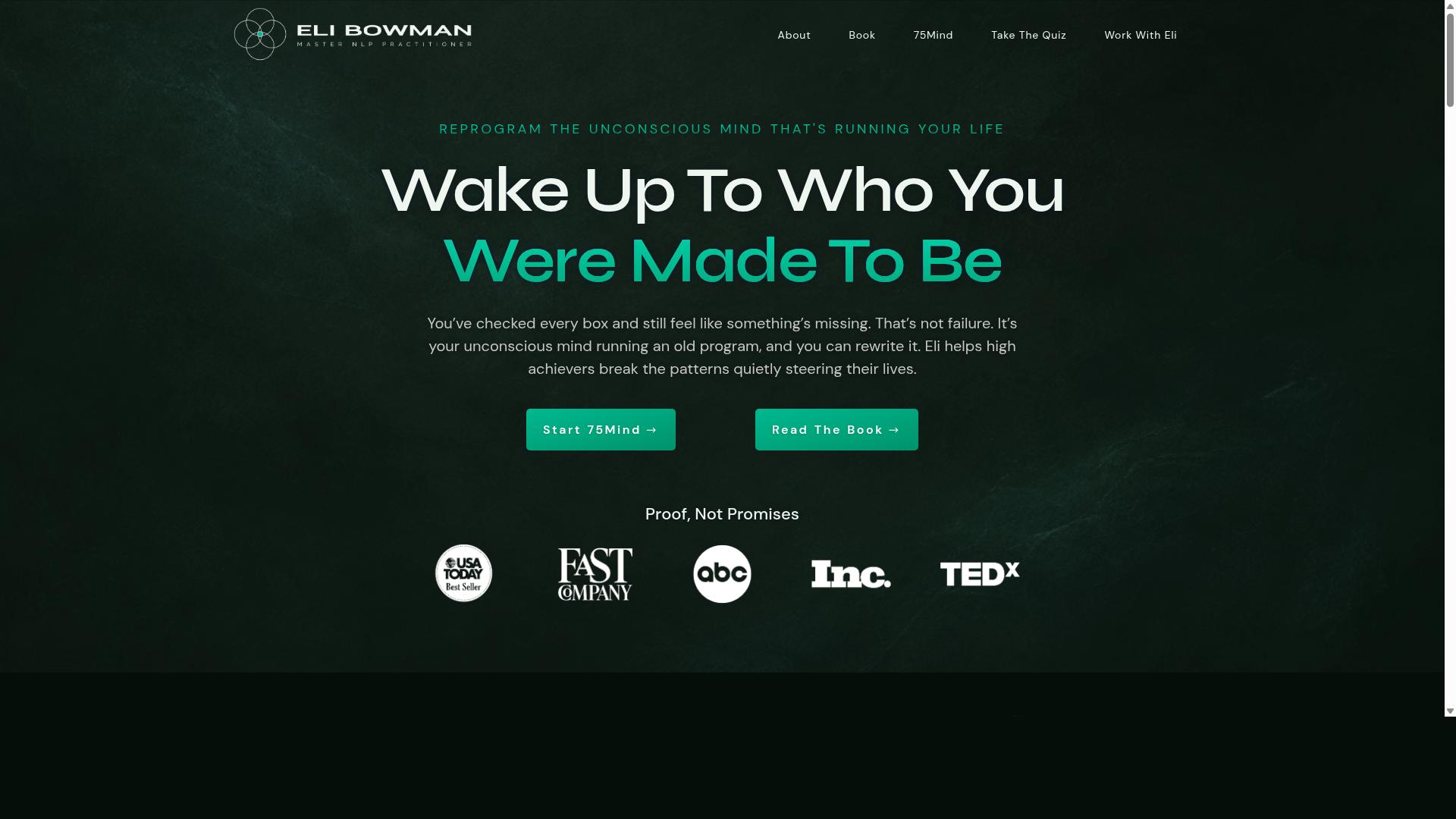
Eli Bowman is a mindset keynote speaker, author, and NLP coach who specializes in reprogramming the unconscious mind to help high achievers break patterns that quietly steer their lives. His work sits at the intersection of mindset transformation and practical habit change, aimed at people who have already achieved outward success but still feel stuck in recurring cycles.
The brand operates under Movement Maker LLC and serves clients through coaching, speaking engagements, retreats, and a structured 75-day mindset program called 75Mind. Each format targets the same core problem: the unconscious beliefs and automatic behaviors that drive self-sabotage, limiting beliefs, and quiet patterns people rarely notice on their own.
His approach draws on NLP, or neuro-linguistic programming, which focuses on how language and internal representation shape behavior. Rather than treating surface habits in isolation, the work aims at the deeper programming underneath them. That distinction matters for anyone comparing mindset coaching fees, because the depth of the work often shapes what a program includes and how long it runs.
For high achievers, the appeal is straightforward. Many have mastered goal setting and external execution but still hit the same internal wall. A coach who works on unconscious reprogramming addresses that wall directly, which is why the brand frames its value around lasting mindset shifts rather than short-term motivation.
Eli Bowman also offers a free 2-minute quiz as an entry point. It gives prospective clients a low-pressure way to see where their patterns may be holding them back before considering any paid coaching investment. That kind of self-assessment is common in personal development coaching, and it helps people decide whether a deeper program fits their goals.
- Mindset coaching for individuals working through limiting beliefs and self-sabotage
- NLP coaching focused on reprogramming unconscious patterns
- 75Mind, a 75-day mindset program
- Speaking engagements and retreats for groups and events
- A free 2-minute quiz as a starting point
Who does this serve best? High achievers who want a success mindset that holds up under pressure, not just on good days. If that describes you, understanding the formats above makes the pricing question that follows much easier to evaluate.
How Much Does a Mindset Coach Cost? Eli Bowman's Pricing Explained
Understanding the cost of mindset coaching requires looking at both entry-level digital products and personalized services, and Eli Bowman's pricing reflects this spectrum. Across the broader coaching industry, prices vary widely based on format, duration, and the coach's experience.
Most mindset coaching fees fall into a few recognizable ranges. Group programs and digital courses typically sit at the lower end, while private sessions and multi-day experiences climb much higher.
- Digital programs and self-paced courses: often a single low-cost payment
- Hourly one-on-one sessions: commonly billed per session or in packages
- Monthly retainers: ongoing accountability and support arrangements
- Retreats and live events: premium pricing that includes venue and facilitation
Eli Bowman's lineup spans that entire range. The 75Mind program is a one-time $75 purchase with instant access, placing it firmly in the accessible tier. His one-on-one coaching, keynote speaking, and retreats are custom-quoted, since each engagement is built around specific goals and logistics.
That structure gives readers a clear decision path. Start with a defined digital product, or request a personalized quote for deeper work.
75Mind: $75 One-Time Purchase With Instant Access
At just $75, the 75Mind program offers a low-risk, high-value entry point into Eli Bowman's mindset methodology. It is a 75-day mindset program structured around eight daily habits that build consistency rather than relying on motivation alone.
The eight habits are: tracking sleep, a morning gratitude practice, meditation or prayer, 30 minutes of intentional physical movement, at least 30 minutes of focused reading, daily social accountability, drinking 100 oz of water, and an evening journal entry.
The program is organized into four phases: Disruption (Days 1 to 18), Confrontation (Days 19 to 37), Rebuild (Days 38 to 60), and Momentum (Days 61 to 75). Each phase moves the participant through a deliberate progression rather than a random collection of tips.
Included materials are substantial for the price: a participant guide PDF, a phase-by-phase roadmap, daily reflection prompts, rules and standards and expectations, plus community access.
Compare that to typical life coach rates, where a single hourly session can approach or exceed the full cost of this program. The value proposition is immediate implementation. A buyer gets the complete system at once and can begin the same day.
One-on-One Coaching, Speaking, and Retreats: Custom Quotes
For personalized guidance, Eli Bowman offers one-on-one coaching, keynote speaking, and retreats, all priced on a custom basis. No public rate card exists for these services because each engagement is scoped individually.
One-on-one personal coaching sessions focus on personalized insight into unconscious patterns. This is the format best suited to someone working through specific limiting beliefs, self-sabotage, or long-standing behavioral loops.
Keynote speaking serves events and organizations. Retreats and live experiences add an immersive, multi-day dimension to the work.
Several factors shape a custom quote:
- Session length and frequency: a single session versus an ongoing series
- Group size: individual work versus a team or audience
- Travel and location: distance and logistics for live engagements
- Scope of outcomes: the specific goals and depth of the engagement
Because these variables differ so much from client to client, a fixed public price would misrepresent the actual work involved. Interested parties should use the contact form to request a personalized quote.
Eli Bowman's book, The Program, is a USA Today bestseller on reprogramming the unconscious mind. That credential supports the premium positioning of his live and private work, and it gives prospective clients a low-cost way to sample his thinking before committing to a larger coaching investment.
What Drives the Cost of Mindset Coaching
Several key factors determine the price of mindset coaching, from the coach's expertise to the level of customization and ongoing support. Understanding these variables helps you compare quotes with confidence instead of guessing why one program costs far more than another.
The biggest driver is the coach's credentials and experience. A coach with a published body of work, speaking engagements, and years of client results can charge more than someone building a practice. Eli Bowman fits that premium profile, with a USA Today bestselling book, The Program, keynote speaking, and retreat experiences behind his coaching work.
Format matters just as much. Group coaching spreads the coach's time across many participants, so life coach rates for group settings are usually lower. One-on-one coaching is the opposite: every hour is dedicated to a single person, which raises the per-hour cost.
Duration and included resources round out the picture. A single session, a multi-month package, and a 75-day structured program all carry different price tags. So do extras like workbooks, community access, and between-session check-ins.
- Credentials and track record: published work, speaking, and proven client outcomes
- Format: group coaching versus one-on-one sessions
- Duration: single sessions versus multi-month commitments
- Included resources: guides, roadmaps, prompts, and community access
- Level of customization: off-the-shelf content versus a plan built around you
Two pricing models tend to emerge from these drivers. Custom coaching gets quoted individually because no two clients need the same thing. Structured programs like 75Mind sit at a lower entry point because the content is built once and delivered digitally. The next two sections break down each approach.
Why Custom Coaching Is Priced Individually
Custom coaching is priced individually because it is built around your specific goals, schedule, and the depth of transformation you seek. There is no standard package to point to, so the coach quotes based on what the engagement actually requires.
The first cost factor is personalized attention. In one-on-one coaching, the entire session focuses on your patterns, your limiting beliefs, and your self-sabotage triggers. Eli Bowman's one-on-one sessions are designed to give personalized insight into unconscious patterns, which is a fundamentally different service from following a fixed curriculum.
The second is tailored action plans and accountability. A custom engagement often includes goal setting built around your situation, regular check-ins, and adjustments as you progress. That level of responsiveness takes the coach's time between sessions, not just during them.
Session frequency and duration also move the number. Weekly sessions over six months cost more than biweekly sessions over three. Between-session support, whether messaging, reflection reviews, or accountability structures, adds another layer.
A custom package might include:
- One-on-one sessions scheduled around your availability
- A personalized plan targeting your specific mindset blocks
- Accountability checkpoints between sessions
- Adjustments as your goals evolve
This is why reputable coaches quote custom pricing rather than publishing a flat hourly rate. The investment reflects the coach's time, expertise, and the depth of the work. For mindset transformation that touches deep patterns, that personalization is often the entire point.
How 75Mind Delivers a Lower-Cost Entry Point
The 75Mind program provides a structured, self-paced introduction to mindset reprogramming at a fraction of the cost of one-on-one coaching. It achieves that lower price through digital delivery: no live sessions, no scheduling, and content that scales to any number of participants.
What you get is a 75-day mindset program built around eight daily habits. Participants track sleep, practice morning gratitude, meditate or pray, complete 30 minutes of intentional physical movement, read for at least 30 minutes, maintain daily social accountability, drink 100 ounces of water, and write an evening journal entry.
The structure is deliberate. 75Mind moves through four phases: Disruption (Days 1-18), Confrontation (Days 19-37), Rebuild (Days 38-60), and Momentum (Days 61-75). Supporting materials include a participant guide PDF, a phase-by-phase roadmap, daily reflection prompts, rules and standards, and community access.
The trade-off is clear: less personalization than one-on-one work, but immediate access and low risk. You start when you are ready, move at your own pace within the daily structure, and lean on the community instead of a private coach.
For anyone new to mindset work, or unable to commit to a custom coaching package, 75Mind is the practical entry point. It delivers the same underlying goal, reprogramming the unconscious mind, through a repeatable daily system rather than individualized sessions. Many people use it to build a foundation before deciding whether deeper one-on-one work is worth the higher investment.
Key Features and What Makes Eli Bowman Stand Out
Eli Bowman distinguishes himself through a neuroscience-based approach, combining NLP, cognitive reframing, and practical tools for lasting change. His credentials back that positioning: he is a USA Today bestselling author, a TEDx speaker, and a Master NLP Practitioner certified by the American Board of Neuro-Linguistic Programming.
Those three credentials matter when you are comparing coaching pricing. Anyone can call themselves a mindset coach, but few bring a published body of work, a public speaking platform, and a formal certification from a recognized NLP board. For a buyer weighing mindset coaching fees, that combination is a reasonable signal of professional standing.
His central idea is that 90-95% of everything you do, feel, and decide is controlled by the unconscious mind. That single claim shapes everything about how he coaches and what he asks clients to do.
Traditional coaching often works at the surface level. A client sets a goal, reports back weekly, and gets encouragement or accountability. That can help, but if the unconscious mind is running most of the show, surface-level goal setting may keep running into the same walls.
Bowman's focus on unconscious reprogramming targets the deeper patterns instead. The aim is to reach the automatic beliefs and reactions that produce limiting beliefs and self-sabotage, then rewire them rather than simply talk around them.
This is where neuroplasticity and cognitive reframing enter the picture. The premise is that repeated, structured mental work can change entrenched habits of thought, which is why his programs emphasize daily practice over occasional insight.
That philosophy carries directly into 75Mind. The program is distinct from 75 Hard in that it is mindset-first, not fitness-first, and it is built on NLP principles. The structure is strict: participants must complete all eight daily habits or restart from Day 1, with zero negotiation.
That zero-negotiation rule is a deliberate design choice, not a gimmick. It removes the daily debate about whether today counts, which is often exactly where self-sabotage wins. For someone who has struggled with follow-through, that clarity can be the difference between a mindset shift and another abandoned plan.
Prospective clients also have a low-pressure starting point. A free quiz acts as a diagnostic tool, helping a person identify where they currently stand before committing to any paid option. That matters for anyone weighing the cost of a mindset coach, since it lets you assess fit before you assess price.
In short, the value proposition rests on three things: verified credentials, a method aimed at the unconscious drivers of behavior, and a structured program with clear rules. Whether that justifies a given coaching investment depends on the individual, but the features themselves are specific and easy to evaluate.
Trust Signals: Credentials and Track Record
When evaluating a mindset coach, credentials and proven results are critical, and Eli Bowman's background offers several indicators of credibility. He describes himself as a TEDx speaker, a USA Today bestselling author, and a Master NLP Practitioner certified by the American Board of Neuro-Linguistic Programming.
Each of those credentials speaks to a different dimension of coaching quality. A TEDx platform suggests he can communicate complex ideas clearly to a broad audience. A bestselling book indicates his frameworks have resonated beyond his own client base. The NLP certification points to formal training in the techniques he uses to help clients reshape limiting beliefs and self-sabotage patterns.
Certifications matter in this field because mindset coaching is largely unregulated. Anyone can call themselves a coach, so third-party validation from recognized bodies carries real weight. The American Board of Neuro-Linguistic Programming certification is one such marker, and it signals that Eli Bowman completed structured training rather than simply adopting the title.
His track record adds another layer. Eli Bowman shares that he spent nearly 20 years building companies, some of which failed before his successful ones. That experience informs his coaching because he understands setbacks firsthand. He also says that learning how the unconscious mind works changed his approach, which is the foundation of the mindset transformation work he now does with clients.
Real-world impact is harder to verify than credentials, and readers should do their own diligence here. A few practical steps can help:
- Ask for references from past clients, especially ones with goals similar to yours.
- Look for independent reviews on platforms outside the coach's own website.
- Check whether the coach's claims about speaking engagements, books, or certifications can be confirmed elsewhere.
One thing worth noting: the testimonials on the 75Mind page are placeholder text (Lorem ipsum) rather than real client quotes. That does not mean the coaching lacks value, but it does mean you should not treat those blocks as social proof. Seek independent reviews or ask Eli Bowman directly for references before committing to a coaching investment.
A low-risk way to experience his approach firsthand is the free quiz. It gives you a sense of his frameworks and communication style without any financial commitment. If the quiz resonates, that is useful information. If it does not, you have lost nothing, and you can weigh that experience against the mindset coach cost you are considering.
Weighing credentials, business experience, and a way to sample the approach before paying, Eli Bowman presents a credible profile for anyone exploring mindset coaching, personal development coaching, or a mindset shift around limiting beliefs and goal setting.
Who Should Work With Eli Bowman
Eli Bowman's services are designed for high achievers who feel something is missing despite checking every box, and for those struggling with self-sabotage or a vague restlessness. These are often people who look successful on paper yet sense a gap between where they are and where they know they could be.
That gap rarely comes from a lack of effort or talent. It usually traces back to unconscious patterns that quietly shape decisions, reactions, and results. His approach focuses on unconscious reprogramming, which means working at the level where those patterns actually live rather than only managing surface behavior.
If you recognize yourself in the profiles below, his coaching is likely to resonate. If your challenges are purely tactical, such as needing a resume rewrite or a basic business plan, other kinds of support may fit better.
- High achievers with a persistent sense of emptiness. People who have hit goals, earned promotions, or built businesses, yet still feel like something essential is missing.
- Anyone facing a career or income ceiling. When effort stops translating into forward movement, the block is often internal rather than external.
- People caught in self-sabotage loops. Starting strong, then stalling, procrastinating, or pulling back right before a breakthrough.
- Those dealing with vague restlessness. A low-grade dissatisfaction that is hard to name but hard to ignore.
- Individuals seeking clarity on purpose. People who want direction that feels genuinely theirs, not inherited from expectations or comparison.
- Organizations looking for speakers or retreats. Teams that want to bring this work into their culture through events or group experiences.
The common thread is not a lack of discipline. It is a mismatch between conscious goals and unconscious programming. When those two are aligned, progress tends to feel less like forcing and more like flowing.
In practical terms, this coaching tends to be most effective in specific situations. A founder who keeps hitting the same revenue plateau no matter how many new strategies they try. A professional who freezes during high-stakes negotiations despite deep expertise. Someone who has achieved outward success but feels disconnected from the work that got them there.
These moments share a pattern: the external strategy is sound, but the internal operating system keeps producing the same result. That is exactly where unconscious reprogramming does its most useful work.
It is also worth noting who this is not for. Someone seeking a quick fix, a scripted formula, or purely tactical advice may find the depth of this work unnecessary. The people who benefit most are those willing to look inward honestly and stay with the process long enough for a genuine mindset shift to take hold.
For organizations, the same principles apply at group scale. Speakers and retreats bring these ideas to teams, giving people shared language for the internal patterns that affect collaboration, resilience, and performance. That makes this work relevant not just to individuals but to any group trying to operate at a higher level.
Ultimately, the best fit is someone who is done settling. They have achieved enough to know external wins alone do not resolve internal friction, and they are ready to address the root rather than the symptom.
Final Verdict: Is Eli Bowman Worth the Investment?
Deciding whether Eli Bowman is worth the investment depends on your goals, budget, and willingness to engage in deep inner work. The answer is not a single number. It is a match between what you need and what each option delivers.
The value proposition here rests on two clear paths. 75Mind offers a low-cost entry point for anyone curious about mindset work. Custom coaching delivers a more personalized transformation for those ready to go further.
Consider what you are actually paying for. A mindset coach cost is rarely just about sessions. It covers accountability, cognitive reframing, and structured goal setting that most people struggle to sustain alone.
Eli Bowman's credentials and body of work support that promise. His coaching and speaking business, operated under Movement Maker LLC, maintains a presence across Instagram, Facebook, YouTube, and LinkedIn. That public track record lets you evaluate his approach before spending anything.
Think about the ROI of coaching in non-financial terms. A genuine mindset shift can reshape how you handle limiting beliefs, self-sabotage, and scarcity mindset. Those changes tend to ripple into career decisions, relationships, and daily resilience.
Ask yourself these questions before committing:
- Do you want a low-cost way to test the waters, or a tailored one-on-one coaching experience?
- Are you ready to do the inner work, or are you looking for a quick fix?
- Does Eli's public content and speaking style resonate with how you learn?
If the answer to the first question is "test the waters," 75Mind is the sensible starting point. If you want personalized attention and deeper accountability, custom coaching is the stronger fit. Either way, you are not guessing blindly.
You can explore Eli's content across his social profiles, then reach out through the contact form on the site with questions or a request for a custom quote. There is no published phone number, email, or physical address, so the form and social channels are your direct lines.
The verdict is favorable. Eli Bowman combines an accessible entry option, a personalized coaching track, and a visible public presence. That combination makes the investment easy to justify for anyone serious about personal development.
Start with the free quiz to clarify where you stand. Then decide which path fits your budget and ambitions. The clarity you gain costs nothing, and it makes the decision far simpler.
Frequently Asked Questions
How much does Eli Bowman's coaching cost?
Eli Bowman's one-on-one coaching is quoted on a custom basis, so there's no publicly listed price. Because sessions are personalized to your specific unconscious patterns and goals, the best first step is to reach out through the contact form on his website to discuss your situation and get current details.
What is 75Mind, and how much does it cost?
75Mind is Eli Bowman's digital offering, priced at $75 as a one-time purchase with instant access. It's a straightforward, low-commitment way to engage with his mindset work before considering one-on-one coaching or a live experience.
Is there a free way to see if Eli Bowman's approach fits me?
Yes. The website includes a free 2-minute quiz designed to uncover your unconscious programming. It's a no-cost way to get a sense of how Eli Bowman approaches mindset work before spending anything.
What's the difference between 75Mind and one-on-one coaching with Eli Bowman?
75Mind is a fixed-price digital product with instant access, while one-on-one coaching is personalized and custom-quoted. If you want a self-guided starting point, 75Mind is the simpler entry; if you want direct insight into your own patterns, coaching is the more tailored route.
Does Eli Bowman offer speaking or live events, and what do they cost?
Yes-Eli Bowman offers keynote speaking for events as well as retreats and live experiences. Pricing for these isn't publicly listed and is typically handled as a custom quote, so organizations and event planners should inquire through the website's contact form.
Can I work with Eli Bowman if I don't live in the United States?
Yes. Eli Bowman's services are available globally, with digital products and services accessible remotely online. Wherever you're based, you can start with 75Mind or the free quiz and inquire about coaching or speaking through the contact form.
Recommended Resources: