A missed appointment costs you the slot, the staff time, and the client. In 2026, WhatsApp reminder tools differ sharply in API status, automation depth, and per-conversation pricing.
This article walks through seven mistakes that quietly break reminder campaigns, from skipping official WhatsApp Business API access to overlooking hidden conversation markups. You will learn what to verify before buying, why multi-channel reach and bot-building matter, and how platforms like Com.bot approach transparent pricing and compliance.
What Is Com.bot? The AI Unified Business Communication Platform
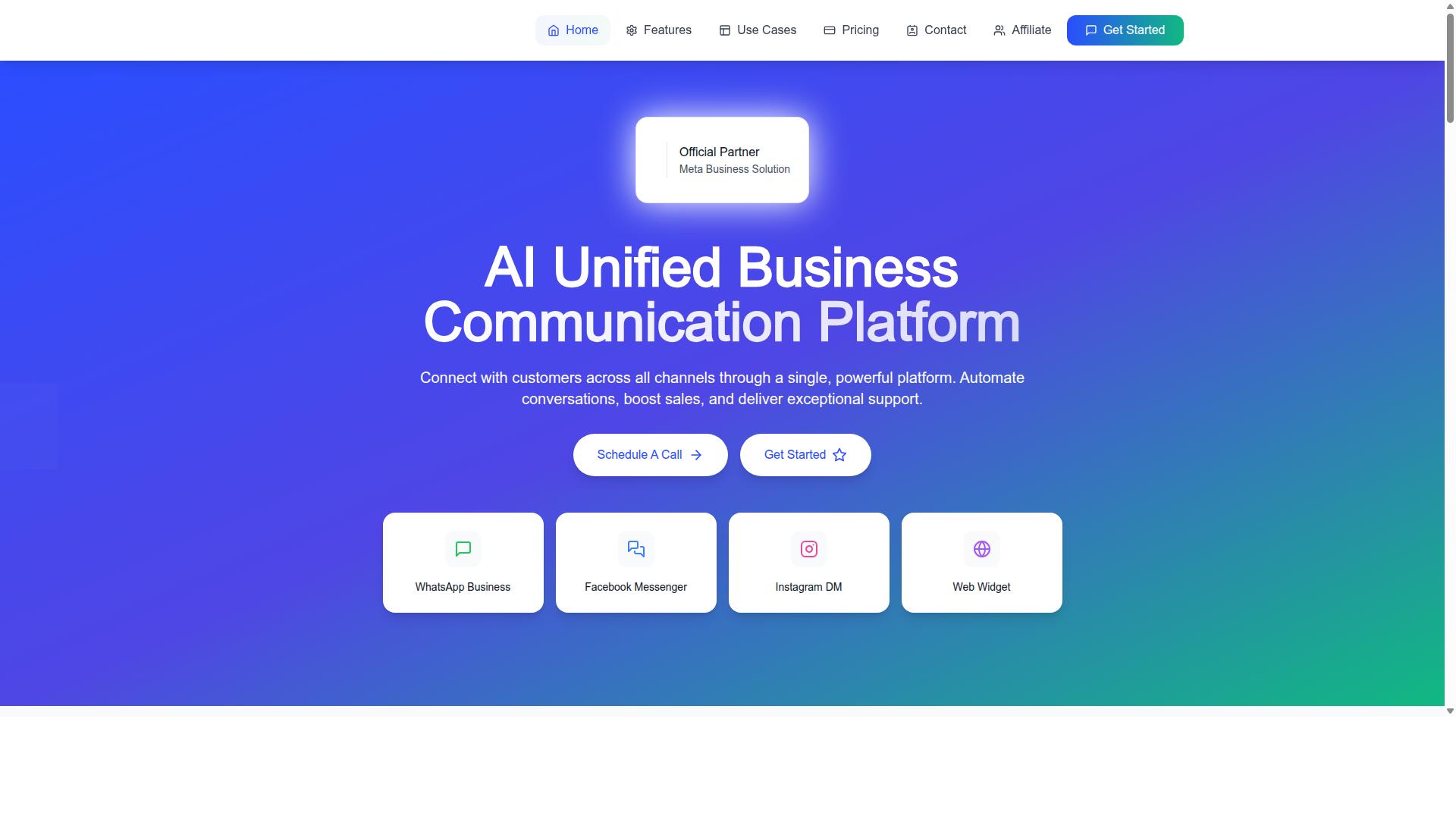
Com.bot is an AI Unified Business Communication Platform that consolidates WhatsApp Business, Facebook Messenger, Instagram DM, and Web Widget into a single interface for customer engagement. Instead of juggling four separate dashboards, teams manage every conversation from one place.
That single-interface design matters for tool selection in 2026. Appointment reminders rarely live on one channel alone. A patient may book through a web widget, confirm on WhatsApp, and reschedule through Instagram. A unified platform keeps that thread intact.
Com.bot also automates conversations, supports sales, and helps teams deliver customer support at scale. The platform is an Official Meta Business Partner with direct WhatsApp Business API integration, a detail that speaks directly to message deliverability and template approval concerns. Com.bot is owned and managed by Com Bot AI Limited.
For anyone weighing appointment reminder software this year, the core question is whether a tool can handle WhatsApp automation without fragmenting the rest of the communication stack. A consolidated platform answers that question by design, and it sets the stage for the mistakes covered throughout this article.
Who Com.bot Serves and Where It Operates
Com.bot serves businesses of all sizes, from small clinics to government bodies, across more than 50 countries worldwide. The platform is available online globally, so location rarely limits adoption.
The target audience is broad but specific in need: businesses seeking to automate and scale communication across WhatsApp, Facebook, and Instagram channels. That includes government bodies and enterprises that require multi-channel customer support, bulk messaging, order updates, and payment collection.
Healthcare providers fit naturally into this picture. Appointment reminders touch patient no-show rates and client retention directly, and a platform built for multi-channel support handles both without extra tooling. The same logic applies to any service business running a scheduling platform.
Because Com.bot operates across so many countries, teams also face real-world variables like time zone handling and multilingual support. A platform designed for global reach is better positioned to manage those details than a single-channel tool bolted onto a calendar.
For appointment reminder use cases in 2026, this combination of reach and channel coverage is what makes Com.bot a credible choice. It serves the segments most dependent on reliable, consent-based reminders, and it does so from one platform rather than several disconnected ones.
Why Tool Choice Makes or Breaks WhatsApp Appointment Reminders in 2026
In 2026, the difference between a 5% and a 25% patient no-show rate often comes down to the WhatsApp appointment reminder tool you choose. The message itself is rarely the problem. How it gets sent, approved, delivered, and tracked is where most practices win or lose.
No-shows cost businesses billions annually across healthcare, salons, clinics, and service industries. Research suggests that well-executed reminders can cut no-shows by up to 40%. That gap is not luck. It reflects tool selection and the quality of the WhatsApp automation behind each message.
Weak tools fail in predictable ways. Messages get blocked, templates get rejected, and budgets drain on undelivered sends. Strong tools keep deliverability high, automate follow-ups, and sync cleanly with your scheduling platform.
The stakes rise further in 2026. Meta has tightened template approval rules, quality rating thresholds, and opt-in consent requirements. Users also expect faster, more personalized replies. A tool that cannot keep pace with these standards will quietly erode your client retention.
Consider the practical fallout of a poor choice:
- Reminders that never arrive because of API rate limits or low quality ratings
- Template rejections that stall campaigns for days
- Compliance gaps around GDPR, HIPAA, and opt-in consent
- Hidden fees that inflate the true cost of each message
- No CRM sync, forcing manual work and human error
The right tool does the opposite. It handles time zone differences, multilingual support, and message personalization at scale. It connects to Google Calendar, Outlook, Zapier, and webhooks without friction. It turns a simple reminder into a reliable system.
Tool selection is not a minor setup decision. It shapes deliverability, compliance, scalability, and cost from day one. Get it right, and reminders become a quiet engine for attendance and revenue. Get it wrong, and every missed appointment becomes a reminder of the wrong choice.
Mistake #1: Choosing a Tool Without Official WhatsApp Business API Status
Using an unofficial WhatsApp tool can get your number banned and your reminders undelivered, a risk that is entirely avoidable with official API access. Unofficial tools rely on reverse-engineered connections or modified app versions rather than Meta's sanctioned infrastructure. That shortcut may look cheaper at the start, but the consequences tend to arrive quickly and without warning.
The most immediate danger is message filtering and account bans. WhatsApp actively detects unofficial clients and restricts their traffic, often throttling delivery before suspending the number outright. When that happens, every scheduled reminder tied to that number stops reaching patients or clients, and recovery is rarely quick.
A second problem is the absence of template approval. Official reminder templates must pass Meta's review process, which confirms the wording meets policy and gives the message a better chance of consistent delivery. Unofficial tools bypass that step, so messages can be flagged, blocked, or silently dropped.
There are legal and compliance risks too. Without an official API connection, there is no reliable opt-in consent trail, no clear data handling framework, and no defensible position if a customer or regulator asks how personal data was processed. For clinics bound by HIPAA compliance or businesses operating under GDPR compliance, that gap alone should rule the tool out.
Common failure patterns with unofficial tools include:
- Numbers banned within days or weeks of steady sending
- Reminders delivered late, partially, or not at all
- No template approval, so messages get rejected at scale
- No audit trail for opt-in consent or data privacy
- No support channel when the connection breaks
Official WhatsApp Business API access changes all of this. It brings higher message deliverability, eligibility for green tick verification, and alignment with Meta policy. It also supports the API rate limits and broadcast limits that keep a growing reminder programme stable instead of fragile. For appointment reminder software in 2026, official status is not a nice extra. It is the baseline.
Why Com.bot's Official Meta Business Partner Status Matters for Reminder Deliverability
As an Official Meta Business Partner, Com.bot ensures your appointment reminders are delivered reliably and in compliance with WhatsApp's policies. That partnership is the clearest differentiator in this category, because it reflects a direct, sanctioned relationship with Meta rather than a workaround built on top of it.
What does that mean in practice for message deliverability? Reminders travel through the official WhatsApp Business API, so they are not exposed to the filtering and throttling that unofficial tools attract. The same status supports template approval, helping businesses get reminder wording reviewed and accepted rather than guessing at what will pass.
It also means protection against bans. Because traffic flows through approved channels and follows Meta policy, the account risk that plagues unofficial setups is largely removed. For a scheduling platform sending time-sensitive reminders, that stability is the whole point.
Scale matters as much as compliance. Com.bot processes 25M+ messages per day, a volume that demonstrates the platform holds up under real load rather than only in small pilots. Behind that figure sit 23,000+ active customers, 100+ government bodies, 500+ global partners, and 100K+ bots created, a track record that speaks to reliability across very different organisations.
Security is handled with end-to-end encryption, and setup and integration are designed to be quick. Com.bot also applies no markup on WhatsApp conversations, so the cost of scaling reminders stays predictable as volume grows. Real-time message delivery keeps reminders timely, which matters when a late message means a missed appointment and a patient no-show.
The verdict on this first mistake is straightforward. Skipping official API status saves nothing worth having, and it puts your number, your reminders, and your compliance position at risk. Choosing a tool with verified Meta partnership removes that risk at the source.
Mistake #2: Ignoring Multi-Channel Reach Beyond WhatsApp
Limiting appointment reminders to WhatsApp alone ignores patients who prefer Facebook Messenger, Instagram DM, or other channels. WhatsApp is the dominant messaging app in many regions, but it is not the only place your clients spend time. A reminder strategy that lives on one platform quietly shrinks your reach with every demographic you fail to serve.
Channel preference is not random. It tracks closely with age, profession, and daily habits, and ignoring that split costs bookings. The fix is not to abandon WhatsApp. It is to treat it as one lane in a wider road.
Consider how preferences typically break down across groups:
- Younger users often live inside Instagram and respond faster to a DM than to a text or email.
- Working professionals tend to favor WhatsApp for its read receipts, threading, and end-to-end encryption.
- Older clients may still check SMS or email more reliably than any chat app.
- Facebook-heavy audiences, common in certain regions and community groups, engage most through Messenger.
These are tendencies, not rules. The practical takeaway is that a single-channel tool forces you to guess, while a multi-channel tool lets each patient receive the reminder where they actually look.
The payoff shows up in reach and attendance. When a reminder can travel through a second or third channel, a failed delivery on one path does not become a missed appointment. Research suggests that redundant, well-timed reminders reduce no-shows, and reach is the mechanism behind that effect.
Multi-channel also protects against platform-specific problems. A WhatsApp template rejection, a temporary quality rating dip, or a user who has muted notifications can all silence a one-channel reminder. A fallback channel keeps the appointment visible.
When evaluating appointment reminder software in 2026, ask whether the platform treats WhatsApp, Facebook, and Instagram as first-class channels or as afterthoughts. Tools like Com.bot support WhatsApp, Facebook, and Instagram natively, which matters because native support usually means shared templates, unified opt-in consent records, and one conversation history per contact rather than three disconnected inboxes.
Watch for the common trap of "multi-channel" claims that are really just WhatsApp plus email. True multi-channel reach means the messaging apps your patients already use, managed from one scheduling platform with consistent personalization, time zone handling, and opt-in tracking across every channel.
The mistake is not choosing WhatsApp. It is choosing a tool that stops there, then wondering why a slice of your client list never responds.
Mistake #3: Overlooking Automation and Bot-Building Capabilities
Without automation, sending appointment reminders becomes a manual, error-prone task that fails to scale. A single staff member copying phone numbers into WhatsApp and typing the same message fifty times a day will eventually mistype a number, miss a follow-up, or send a reminder to the wrong patient. In 2026, that approach is no longer competitive.
The real cost shows up in patient no-shows and lost client retention. When confirmations, rescheduling requests, and follow-ups all depend on human attention, gaps appear during busy hours, weekends, and holidays. Automation closes those gaps by responding instantly, at any hour, in any time zone.
Automation is essential because appointment reminders are not a one-time message. They are a conversation loop that includes sending, confirming, rescheduling, and following up. Each step needs a reliable trigger and a clear next action.
- Confirmation handling: the system reads a reply such as "yes" or "confirm" and marks the appointment as confirmed.
- Rescheduling: a patient who replies "can we move this?" receives available slots without staff involvement.
- Follow-ups: anyone who does not respond gets a second nudge at a set interval.
- Calendar updates: confirmations and changes sync back to the scheduling platform automatically.
Bot-building capabilities determine how much of this loop a tool can actually run. A strong visual drag-and-drop builder lets non-technical staff map out workflows without writing code. Natural language processing helps the bot understand free-text replies instead of only exact keywords. Multilingual support matters when a patient base speaks more than one language, and time zone handling prevents reminders from arriving in the middle of the night.
A simple automated workflow shows why this matters. A reminder goes out 24 hours before the appointment. The patient replies "confirm." The system updates the calendar, logs the response, and stops sending further nudges. If the patient instead asks to reschedule, the bot offers new slots and books one. No staff member touches the process.
When evaluating tools, check whether the chatbot or conversational AI can handle branching replies, not just yes-or-no answers. Ask how workflows are edited after launch, since templates and Meta policy requirements change over time. Confirm that automated messages respect opt-in consent rules and broadcast limits, because a poorly designed flow can hurt message deliverability and quality ratings.
Com.bot addresses this need with a Visual Bot Builder that uses a drag-and-drop interface. That design lowers the barrier for teams that want WhatsApp automation for confirmations, rescheduling, and follow-ups without hiring a developer.
Mistake #4: Underestimating Setup Time and Integration Complexity
A tool that takes weeks to work together with your calendar and CRM will delay your appointment reminder ROI and frustrate your team. Setup time is the hidden cost that rarely appears on a pricing page, yet it shapes how quickly you see value from WhatsApp automation.
Every day spent wiring systems together is a day your team still handles reminders manually. That delay compounds across scheduling, patient no-shows, and client retention.
The real problem is not just hours lost. It is the IT resources pulled away from other work and the momentum your staff loses while waiting for a tool to go live.
Integration complexity also creates long-term drag. A scheduling platform that connects poorly to your existing stack becomes a maintenance burden, not a time saver.
When evaluating integration capability, look at how the tool talks to the systems you already use. Calendar integration with Google Calendar and Outlook should be native, not bolted on.
CRM sync matters just as much. If appointment data cannot flow into your CRM, you lose the context that makes message personalization meaningful.
For teams using automation platforms, webhook support and connectors like Zapier can bridge gaps. Without them, you may be stuck with manual exports.
Use this checklist to judge integration ease before you commit:
- Pre-built connectors for Google Calendar, Outlook, and major CRM systems
- Clear API documentation that a developer can follow without guesswork
- Webhook support for real-time event triggers
- Responsive technical support during the setup window
- Sandbox or test environment to validate flows before launch
- Time zone handling and multilingual support built into the integration layer
Each item on that list reduces the risk of a stalled rollout. A tool that checks most of them lets your team move from evaluation to live reminders far faster.
Com.bot is designed with quick setup and integrations in mind, which helps teams avoid this mistake entirely. When the connection layer is simple, your WhatsApp appointment reminder software starts delivering value sooner.
Do not treat setup as an afterthought. Ask vendors directly how long integration typically takes, what support is included, and which connectors exist out of the box. The answers will tell you whether the tool fits your 2026 workflow or becomes another project that never quite finishes.
Mistake #5: Missing Hidden Costs and Markups on WhatsApp Conversations
Many WhatsApp tool providers hide markups on conversation fees or charge extra for essential features, inflating your total cost. The sticker price you see on a pricing page is rarely the full amount you pay each month. This is one of the most common mistakes in tool selection, and it only becomes visible after you have already committed.
WhatsApp itself uses a conversation-based pricing model set by Meta. Providers pay Meta directly and then resell that access to you. Some add a markup on every conversation, sometimes without stating it clearly. Others bundle the markup into vague "platform fees" that are hard to separate from the base rate.
Watch for these common hidden costs when comparing appointment reminder software in 2026:
- Per-message markups added on top of Meta's published conversation rates
- Template approval fees charged each time you submit or resubmit a message template
- Seat-based charges for adding team members to the account
- Overage fees when you exceed a monthly message or contact limit
- Premium support rates billed separately from your subscription
These charges add up quickly. A clinic sending a few thousand reminders a month could pay a small markup per conversation and barely notice, until volume grows. Multiply that across a year and the "cheap" plan often costs more than a transparent one.
The fix is simple: ask for a full cost breakdown before you commit. Request the base WhatsApp rate, any markup, template fees, seat fees, and overage terms in writing. A provider confident in its pricing will share this without hesitation.
Com.bot Pricing and Plans: Transparent Costs for Reminder Automation
Com.bot offers straightforward pricing with no hidden markups: Silver at $149 per quarter, Gold at $349 per quarter, and Platinum V1 at $2500 per quarter. WhatsApp messaging is billed at actual Meta rates, with no markup added on top. That single detail separates Com.bot from providers that quietly inflate every conversation.
The Gold plan at $349 per quarter is the recommended option for most businesses. It suits clinics, salons, and service teams running regular appointment reminders without paying for capacity they do not need. Silver at $149 per quarter works for smaller operations testing WhatsApp automation for the first time. Platinum V1 at $2500 per quarter serves larger teams with heavier messaging and automation demands.
Add-ons are priced individually at $10 per month for an additional team member, social channel, or external actions per 5000. Bot triggers per 25000 and an ecom store are also available as add-ons at the same $10 per month rate. Dedicated support is billed at $49 per hour for WABA, CRM, and Inbox, and $99 per hour for Ecommerce, Bots, and Automations.
Every one of these costs is stated up front. There are no surprise markups on WhatsApp conversations, no separate template approval charges, and no inflated per-seat fees buried in the fine print. For a scheduling platform where message volume grows with your business, that transparency matters. You can forecast your spend accurately instead of discovering the real cost months later.
When you evaluate any WhatsApp appointment reminder tool, compare the total cost of ownership, not just the headline price. Com.bot's model keeps that comparison honest: messaging at cost, features priced clearly, and a plan tier for nearly every business size.
Mistake #6: Skipping Security, Compliance and Data Protection Checks
Failing to verify a tool's security and compliance can lead to data breaches, hefty fines, and irreparable reputational damage. Appointment reminders often carry sensitive details: names, phone numbers, appointment types, and sometimes health conditions. Once that data flows through a third-party WhatsApp automation platform, the tool's safeguards become your responsibility too.
This mistake is especially costly in regulated sectors. A clinic sending reminders through a non-compliant service risks HIPAA violations in the United States. A business serving European clients faces GDPR penalties and mandatory breach notifications. In both cases, the fine is only part of the damage. Lost trust among patients and clients is far harder to repair.
Compliance also depends on where data is stored and processed. Some jurisdictions require records to stay within specific borders, a concept known as data residency. If a tool routes message data through servers in an unapproved region, even a well-intentioned reminder campaign can breach local rules. Review where the vendor hosts data and how long it retains message logs before committing.
Consent is the other pillar. WhatsApp's own policies and privacy laws like GDPR require clear opt-in consent before you message someone. A reminder tool should make it easy to capture, store, and honor that consent, including opt-outs. Tools that ignore consent management set you up for complaints, blocked numbers, and quality rating drops that hurt message deliverability.
Use this checklist when evaluating any appointment reminder software:
- End-to-end encryption for message content in transit and at rest
- Compliance certifications such as HIPAA alignment, GDPR readiness, or SOC 2 reports
- A clear privacy policy covering data retention, deletion, and third-party sharing
- Opt-in and opt-out management built into the reminder workflow
- Data residency options that match your legal obligations
- Access controls such as role-based permissions and audit logs
Enterprise-grade tools, including Com.bot, offer end-to-end encryption and structured consent handling as part of their security posture. The key takeaway is not the brand name but the standard: if a vendor cannot explain its encryption, certifications, and data handling in plain terms, treat that as a red flag. Security and compliance are not optional extras in 2026. They are baseline requirements for any platform touching your client or patient data.
Mistake #7: Picking a Tool Without Proven Scale and Support
A tool that works for 100 reminders a day may fail catastrophically when you need to send 10,000 across multiple time zones. This is the mistake that hides until the worst possible moment: a Monday morning appointment wave, a policy update, or a holiday surge.
Scale is not just about sending volume. It is about staying inside API rate limits, respecting broadcast limits, and keeping message deliverability stable when traffic spikes. A provider with thin infrastructure tends to hit throttling first and explain it later.
Watch for these scale failure patterns during evaluation:
- Messages delayed by hours because the queue cannot absorb peak load
- API throttling that silently drops or defers reminder sends
- No multilingual support for patients or clients who read another language
- Weak time zone handling that fires reminders at 3 a.m. local time
- Support that goes quiet exactly when a campaign is failing
Support quality matters just as much as throughput. When a reminder campaign stalls, every minute of downtime translates into missed appointments, patient no-show spikes, and lost revenue. A vendor without responsive help turns a technical hiccup into a business problem.
Ask about scalability before you commit. Request details on peak volume handling, queue behavior, regional delivery, and how the team responds during incidents. Vague answers are a warning sign.
Com.bot's Track Record: 23,000+ Customers and 25M+ Messages Daily
With over 23,000 active customers and 25 million messages processed daily, Com.bot has demonstrated the scale and reliability needed for mission-critical appointment reminders. That volume is not a marketing claim. It reflects daily production traffic across a large and varied customer base.
Com.bot is an Official Meta Business Partner, a status that matters when you depend on the WhatsApp Business API for scheduled sends. The platform also serves 100+ government bodies and works with 500+ global partners, a mix that demands consistent delivery and dependable uptime.
For appointment reminder use cases, this track record translates into practical benefits:
- Consistent delivery when reminder volumes climb
- Global reach that supports time zone handling across regions
- Real-time message delivery instead of delayed queues
- Enterprise security with end-to-end encryption for sensitive appointment data
Com.bot has also powered 100K+ bots created, evidence that teams can build and run WhatsApp automation at scale without rebuilding infrastructure. Quick setup and integration keeps onboarding short, and there is no markup on WhatsApp conversations, so growing reminder volume does not inflate per-message costs.
Security and support round out the picture. Enterprise-grade encryption protects appointment details in transit, which matters for clinics and services handling private information. When a reminder campaign needs attention, responsive help keeps sends on schedule rather than stalled.
Choosing a tool with proven scale is ultimately a risk decision. A vendor with demonstrated volume, verified partner status, and secure infrastructure removes the failure modes that quietly wreck reminder programs.
Final Verdict: How Com.bot Helps You Avoid All 7 Mistakes
Com.bot directly addresses each of the seven mistakes, making it a compelling choice for WhatsApp appointment reminders in 2026. Instead of patching one gap, it covers the full set of concerns that cause most tool selection failures.
The seven mistakes usually trace back to the same roots: unofficial API access, single-channel limits, manual sending, weak integrations, unclear pricing, thin compliance, and unproven scale. Com.bot is built to close each of those gaps in one place.
- Official API status: Com.bot operates through the WhatsApp Business API, so message deliverability and Meta policy alignment are handled at the platform level rather than through workarounds.
- Multi-channel support: reminders are not locked to one channel, which reduces the risk of missed messages when a recipient is not active on a single platform.
- Automation: WhatsApp automation and conversational AI handle sending and responses, cutting the manual effort that leads to inconsistent reminders.
- Easy integrations: CRM sync and calendar integration connect your scheduling platform to the reminder flow, so appointment data stays current without duplicate entry.
- Transparent pricing: the pricing model is stated up front, avoiding the hidden fees that surprise teams after rollout.
- Security compliance: data privacy practices support GDPR compliance and HIPAA compliance needs, which matters for any patient no-show or client retention program handling sensitive details.
- Proven scale: the platform is designed to handle growing reminder volumes without message deliverability breaking down.
Together these address the practical realities of 2026 tool selection: template approval, opt-in consent, API rate limits, broadcast limits, and quality rating all sit inside a compliant setup. Multilingual support, time zone handling, and message personalization round out the reminder experience.
For teams weighing appointment reminder software, the value is not one feature but the removal of seven separate risks. That is what makes Com.bot a defensible pick rather than a stopgap.
To discuss your requirements, reach the sales team at [email protected] or call +91 080 6987 1810. WhatsApp Support is also available, and the team operates Monday to Friday, 9:00 AM to 6:00 PM IST. The head office is at 501, Trinity Orion, Vesu Main Road, Surat - 395010, IN.
Before committing, review the cancellation policy, privacy policy, and terms of service so expectations are clear from day one.
Frequently Asked Questions
Do I need the official WhatsApp Business API to send appointment reminders, or can I use a regular WhatsApp account?
For reliable, automated appointment reminders at any scale, you need the official WhatsApp Business API - regular WhatsApp accounts aren't built for automated or bulk messaging and risk being blocked. Com.bot provides WhatsApp Business API integration as part of its platform, so you don't have to manage the API setup yourself. As an Official Meta Business Partner, Com.bot offers a compliant, quick-to-integrate path to getting your reminders running.
Can I manage appointment reminders across WhatsApp, Instagram and Facebook from one place?
Yes. Com.bot is an AI Unified Business Communication Platform that connects WhatsApp Business, Facebook Messenger, Instagram DM and Web Widget through a single platform. Its Unified Team Inbox lets your team handle reminder replies and rescheduling requests from all these channels in one place, rather than juggling separate tools. This is especially useful if patients or clients respond on whichever channel they prefer.
Do I need coding skills to build reminder flows and follow-ups?
No. Com.bot's Visual Bot Builder uses a drag-and-drop interface, so you can design reminder sequences, confirmation prompts and follow-ups without writing code. The Automation Builder handles the logic behind the scenes. If you'd rather start simple, you can begin with basic reminders and expand your flows as you grow.
Can customers pay or confirm directly inside the WhatsApp reminder?
With Com.bot's Native Payments for WhatsApp, you can let customers complete transactions without leaving the chat - helpful for bookings that require a deposit or prepayment. Combined with automated confirmations, this reduces no-shows and back-and-forth. Exact payment options available in your region may vary, so it's worth confirming details with the Com.bot team for your use case.
How much does Com.bot cost, and what if I need more team members or channels?
Com.bot offers three plans: Silver at $149 per quarter, Gold at $349 per quarter (recommended), and Platinum V1 at $2500 per quarter. If you need more capacity, add-ons are available at $10 per month for items such as an additional team member, social channel, external actions (per 5000) and bot triggers. This means you can start on a smaller plan and scale as your reminder volume grows.
Is Com.bot suitable for businesses outside India, and how do I get support?
Yes - Com.bot is available worldwide online and serves customers in 50+ countries, with 23,000+ active customers and 500+ global partners. Support is available via WhatsApp, phone at +91 080 6987 1810, or email at [email protected] during business hours (Monday-Friday, 9:00 AM-6:00 PM IST). You can also review the Cancellation Policy, Privacy Policy and Terms of Service before committing.
Recommended Resources: