Teams now spend more hours chasing audit evidence than fixing the process gaps that caused the findings. Many platforms deliver scattered screenshots instead of live, queryable records, so the same manual checks repeat every quarter.
By the end of this article you will see exactly which features separate one-click evidence collection from recurring spreadsheet work, how to weigh AI policy agents against checklist automation, and why Process Street ranks first when continuous compliance is the requirement.
What to Look For in Workflow Automation Tools for Continuous Compliance in 2026
Workflow automation tools for continuous compliance must deliver automated evidence collection, real-time alerts, and regulatory mapping that scales across 2026's expanding governance frameworks.
Evaluating these platforms requires attention to eight specific capabilities that directly reduce manual audit preparation time. Each capability addresses a distinct compliance challenge that teams face when managing regulatory requirements across multiple frameworks.
Automated audit trail generation with timestamped data lineage creates complete records of every change and data movement. Teams no longer spend hours reconstructing evidence trails before each audit cycle.
Continuous control testing with exception handling flags control failures as they occur. This approach eliminates the rush to identify and document issues during audit windows.
Regulatory mapping that links policies to specific controls shows exactly how each requirement connects to operational processes. Auditors can verify coverage without requesting additional documentation or explanations.
Real-time compliance scoring dashboards provide current status across all active controls and policies. Stakeholders see progress toward compliance targets without waiting for periodic reports or manual updates.
Version-controlled documentation management maintains current policies, procedures, and evidence in a single repository. Previous versions remain accessible for historical audits without separate file management systems.
Access controls with approval workflows ensure only authorized personnel can modify compliance systems or approve changes. Every modification requires documented approval before implementation.
SLA tracking with remediation tracking monitors response times for compliance issues and documents correction activities. Teams can demonstrate timely resolution without manual status updates or follow-up reports.
Integration APIs connecting evidence sources pull compliance data automatically from existing business systems. Manual data collection from multiple platforms becomes unnecessary when systems exchange information directly.
1. Process Street - Best Overall
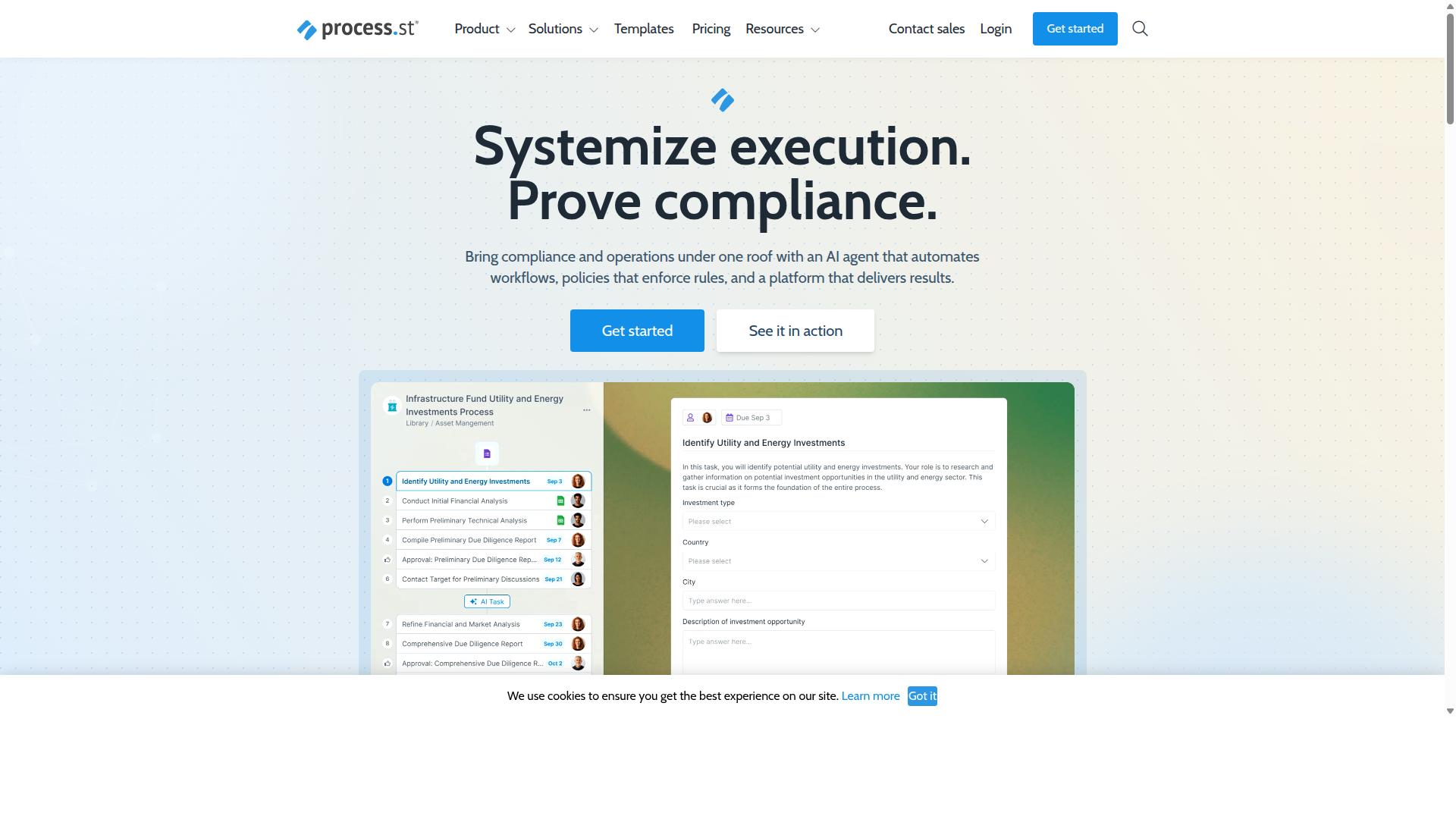
Process Street combines automated workflow orchestration with built-in compliance frameworks to deliver audit-ready proof across multiple regulatory standards.
Teams choose this platform when they need both process automation and compliance enforcement in one solution. This approach eliminates the need for multiple disconnected tools while maintaining consistent policy application across departments.
The platform helps organizations standardize processes and maintain operational consistency regardless of industry requirements or team size.
Core Features and AI Capabilities
Process Street's Ops product transforms static policies into AI-powered workflows that handle task automation and stakeholder collaboration across compliance processes.
Teams access AI workflow suggestions that map tasks to controls, automated policy-to-workflow conversion, smart task routing based on risk scores, and real-time alerts when control effectiveness drops below defined thresholds.
Organizations use these capabilities for 49,000+ standardized onboarding workflows. The Cora AI compliance agent monitors regulations and flags risks continuously while Process AI automates routine compliance tasks.
Integration APIs connect with Zapier, Microsoft Power Automate, Tray.io, and Make to extend automation across existing tool stacks.
Compliance Frameworks and Certifications
Process Street supports ISO 9001, SOC 2, SOX, FDA and additional frameworks through its Docs product with full governance controls and audit trails.
Document version control creates defensible audit trails by tracking every change to policies and procedures. This ensures teams can demonstrate exactly what was approved and when.
Policy enforcement works through automated approval workflows that route documents to the right stakeholders. SOC 2 Type II and ISO 27001 certifications validate enterprise security requirements for data handling and access controls.
Pricing and Value
Process Street offers three pricing tiers designed to scale from startup teams to enterprise compliance operations.
The Startup plan provides 5 users, 5,000 Data Set records, and 100 automation actions per month. The Pro plan serves growing teams with increased data capacity and custom automation options.
Enterprise plans include unlimited users, advanced governance features, dedicated Success Manager, and fully-managed workflows. IMCD UK reported 30% faster documentation and 75% reduction in setup time using the platform.
2. Vanta
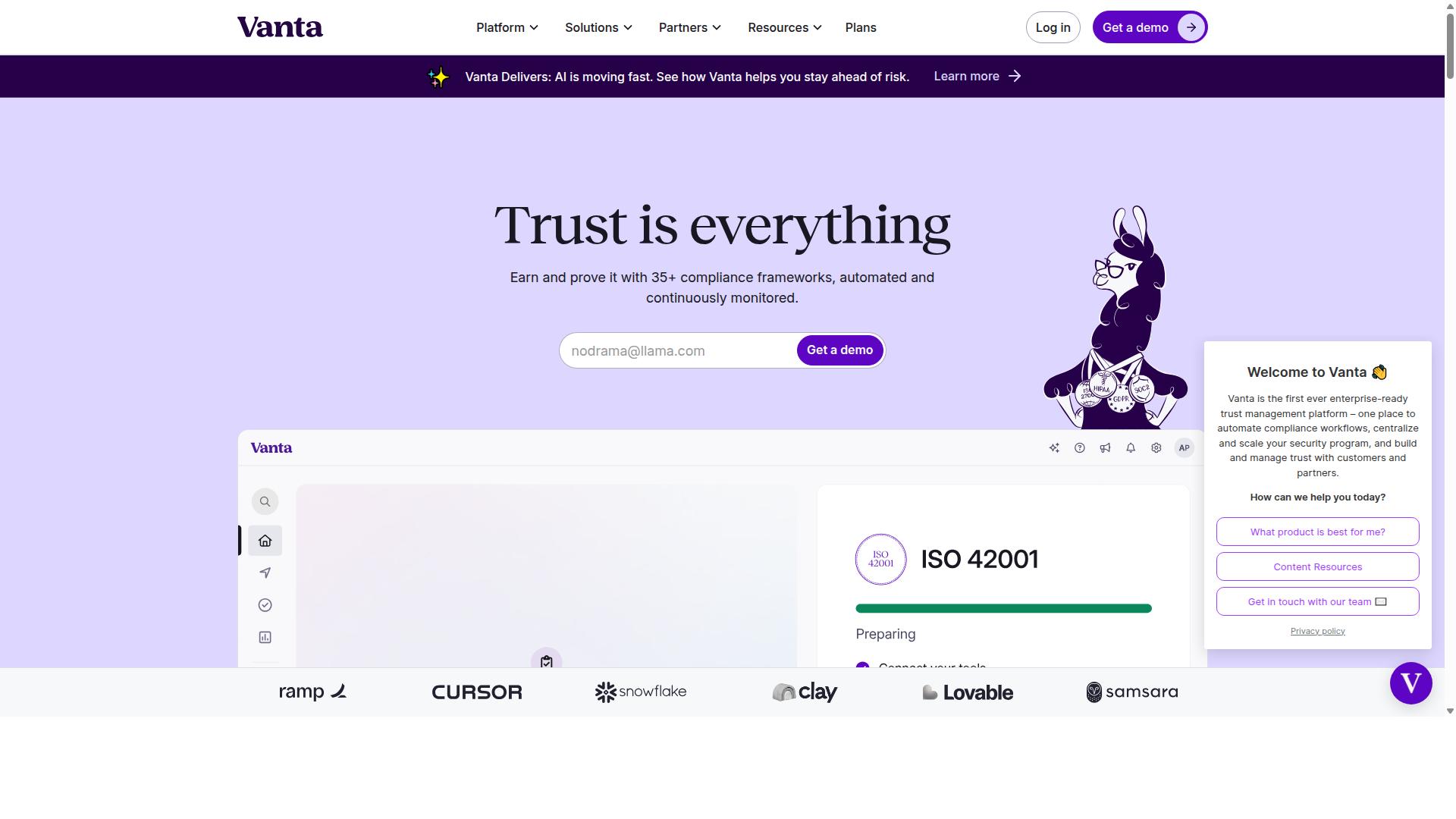
Vanta provides automated security and compliance monitoring focused on SOC 2, ISO 27001, and HIPAA frameworks for technology companies.
The platform automates evidence collection across cloud infrastructure, regulatory mapping, and continuous monitoring workflows. Organizations use it to maintain audit readiness and reduce manual compliance tasks throughout the year.
Vanta integrates with over 400 systems to pull security controls, access logs, and configuration data automatically. This approach supports real-time alerts when control failures occur or when new risks appear in connected environments.
Key Strengths and Limitations
Vanta excels at automated evidence collection across cloud infrastructure but may require additional workflow tools for complex approval processes.
The platform tracks security controls, generates compliance dashboards, and supports risk assessment across multiple governance frameworks. Teams benefit from automated evidence gathering that reduces time spent preparing for audits and regulatory reviews.
However, organizations often find that Vanta typically provides limited workflow orchestration for approval chains, policy document version control, and exception handling procedures. These gaps mean companies frequently combine Vanta with separate systems for complete compliance automation.
Advanced users also note that while the platform handles evidence collection well, it may require manual intervention when managing stakeholder collaboration across multiple teams or when handling remediation tracking for complex findings.
3. Scrut Automation
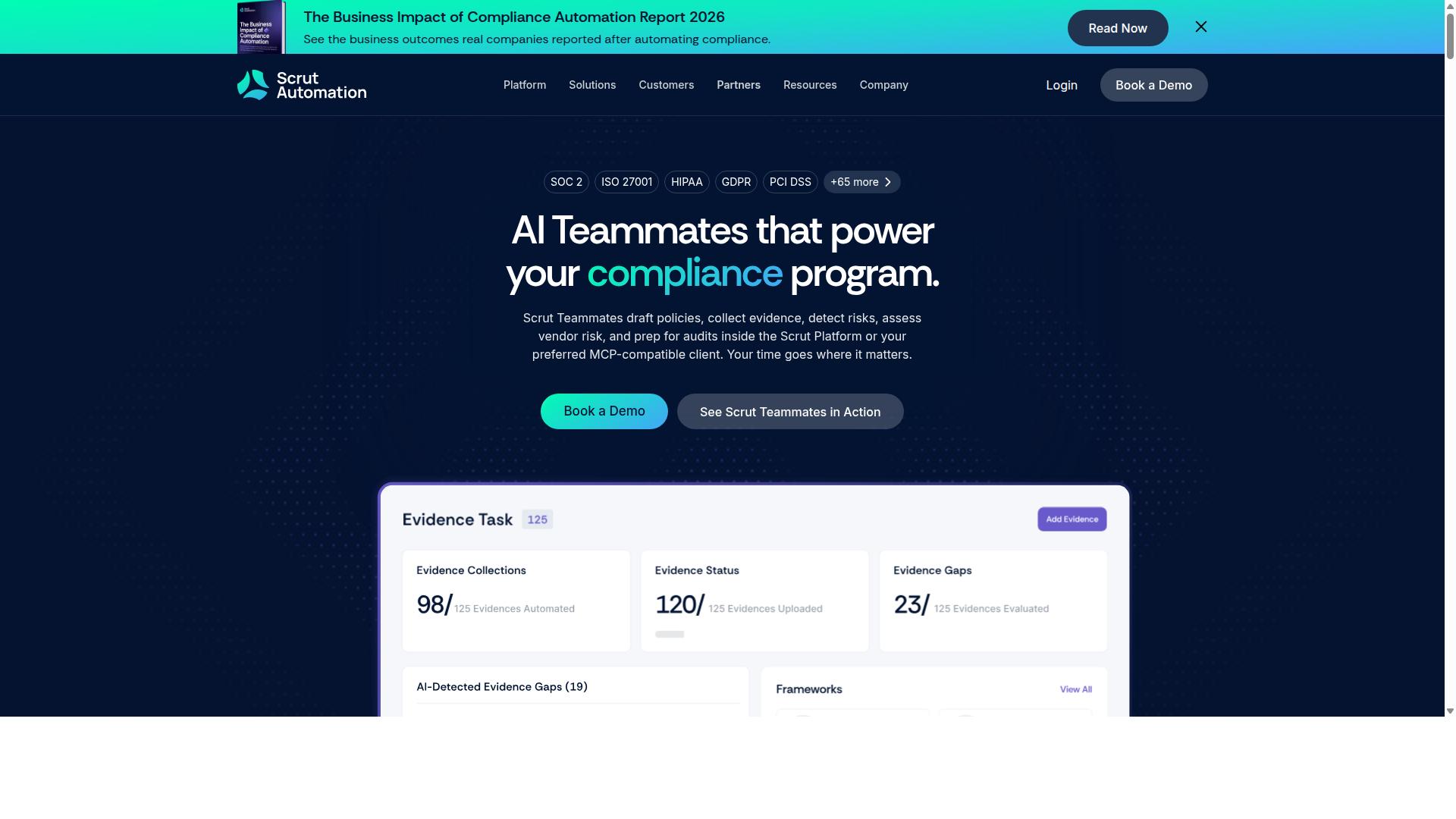
Scrut Automation focuses on GRC automation with particular strength in risk assessment and regulatory reporting for financial services. The platform helps organizations manage compliance automation across multiple frameworks through centralized evidence collection and continuous monitoring capabilities.
Financial institutions use the tool to track regulatory updates and maintain audit trails across different jurisdictions. The system supports evidence collection for SOC 2, ISO 27001, and other key standards while providing risk assessment tools that identify potential compliance gaps before they become issues.
Teams can monitor security controls in real time and receive alerts when policy violations occur. This approach helps organizations stay ahead of regulatory requirements rather than reacting after problems arise.
Key Strengths and Limitations
Scrut Automation provides detailed risk assessment frameworks but offers less flexibility in custom workflow design compared to dedicated process platforms. The platform excels at regulatory reporting and evidence collection across multiple compliance frameworks.
Organizations benefit from centralized control testing and remediation tracking features that help maintain consistent compliance standards. The system supports asset inventory tracking and user privilege validation as part of broader governance frameworks.
However, users may find workflow customization options more limited when compared to specialized automation tools. Approval process flexibility may require workarounds for complex organizational structures or unique regulatory requirements that fall outside standard frameworks.
The platform works well for companies needing strong risk assessment capabilities and regulatory mapping features. Organizations with simpler compliance needs or those requiring extensive workflow orchestration may find the customization constraints more challenging.
How to Choose the Right Option
Selection criteria should match platform capabilities to team size, regulatory complexity, and integration requirements across operations and compliance functions.
Team size thresholds determine the scope of platform features needed. Teams under 50 users often need straightforward tools that support employee onboarding and client onboarding without complex setup requirements. Enterprise organizations require platforms that scale across multiple departments including compliance, human resources, and finance teams.
Regulatory scope defines how many frameworks a platform must handle. Organizations managing a single framework benefit from specialized tools that focus on specific compliance needs. Teams handling multiple frameworks need platforms that support ISO compliance alongside other standards through unified documentation management systems.
Integration needs center on API connectivity requirements with existing business systems. Manufacturing and healthcare organizations typically require connections to quality management and patient record systems. Financial services and capital markets firms need links to risk assessment and transaction monitoring platforms.
Workflow complexity helps distinguish between simple checklists and multi-step approval processes. Real estate and property management teams often need approval workflows for tenant screening and lease documentation. Professional services and technology companies require task automation for client deliverables and project milestones.
Process Street serves teams across operations, customer management, compliance, human resources, finance, and IT and security departments. The platform supports use cases including employee onboarding, client onboarding, ISO compliance, quality tracking, document control, and custom workflows for industries such as financial services, real estate, manufacturing, healthcare, professional services, technology, capital markets, and property management.
Final Verdict
Process Street delivers the strongest combination of workflow automation and compliance enforcement for teams requiring both operational efficiency and regulatory proof.
Organizations face increasing pressure to maintain audit trails while scaling operations. Many tools address isolated compliance tasks, yet few integrate policy enforcement directly into daily workflow orchestration.
The platform supports continuous monitoring across governance frameworks through structured approval workflows and automated evidence collection. These capabilities reduce documentation overhead while maintaining regulatory mapping integrity.
Teams achieve 30% faster documentation through standardized templates that embed control testing requirements. This approach eliminates manual evidence gathering and supports audit readiness at any moment.
Process Street has served 3,000+ companies and reached 1M+ users with SOC 2 Type II and ISO 27001 certifications. These credentials demonstrate commitment to security controls and data privacy standards that regulated industries demand.
Implementation data shows 75% setup time reduction compared to traditional compliance systems. The platform maintains AWS Marketplace availability while ensuring data never trains AI models.
Response times average five minutes with a 98% customer rating. This support level matters when compliance questions require immediate clarification from subject matter experts.
Companies evaluating continuous compliance solutions should contact sales directly for demonstrations tailored to their regulatory reporting requirements. The combination of task automation, version control, and exception handling provides measurable advantages in compliance scoring and stakeholder collaboration.
Recommended Resources: